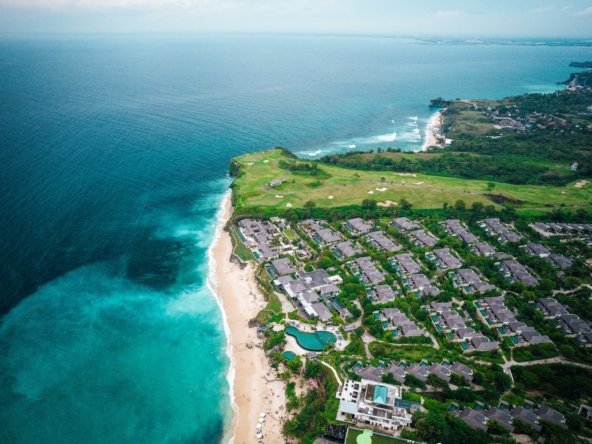
If you are a foreign investor looking to own property in Bali — whether a villa, a boutique resort, or a development site — understanding paid-up capital for PT PMA is not optional. It is the foundation upon which your entire investment structure rests.
Since October 2025, Indonesia’s Investment Coordinating Board (BKPM) has introduced meaningful regulatory changes that directly affect how foreign-owned companies are established and maintained. In 2026, those changes are now fully in force. This guide breaks down exactly what the new rules mean, how they apply to Bali real estate investment, and what every serious investor needs to have in place before committing capital.
What Is a PT PMA and Why Does It Matter for Bali Property?
A PT PMA (Perseroan Terbatas Penanaman Modal Asing) is a foreign-owned limited liability company registered under Indonesian law. For international investors, it is the most legally robust structure available for acquiring and holding property in Bali.
Under Indonesian law, foreigners cannot directly hold Hak Milik (freehold title) over land. However, a PT PMA can legally acquire property under Hak Guna Bangunan (HGB — Right to Build), which grants ownership rights for up to 80 years in total through an initial 30-year term, a 20-year extension, and a further 30-year renewal. In 2026, establishing a PT PMA remains the gold standard for foreign investors seeking security, legitimacy, and tax efficiency in Bali real estate. Our Year in Bali
Beyond property rights, a PT PMA also allows you to legally operate rental income businesses, benefit from certain corporate tax structures, and sponsor your own KITAS (investor stay permit) — making it arguably the most versatile vehicle for long-term investment in Bali.
The 2026 Regulatory Landscape: What Has Changed
BKPM Regulation No. 5 of 2025 — The Key Update
The most significant regulatory development for foreign investors is BKPM Regulation No. 5 of 2025, which came into effect in October 2025 and is now the operative framework in 2026.
One of the most impactful changes is the reduction of the minimum paid-up capital for PT PMA: the new capital requirement has been amended to IDR 2.5 billion, down from the previous IDR 10 billion. Lets Move Indonesia
This is not a minor adjustment. It represents a 75% reduction in the minimum shareholder capital requirement — a deliberate move by the Indonesian government to lower the barrier to entry for serious foreign investors while maintaining overall investment discipline.
Alongside BKPM Regulation No. 5 of 2025, Government Regulation (PP) No. 28 of 2025 governs the risk-based business licensing system (OSS-RBA) through which all PT PMA licences are now processed and monitored. Together, these two regulations define the full compliance environment for foreign investors in 2026.

The Two Capital Figures Every Investor Must Understand
One of the most common — and costly — misunderstandings among foreign investors is conflating two distinct financial thresholds. They are separate obligations that serve different purposes:
- Minimum Paid-Up Capital (Modal Disetor): IDR 2.5 Billion
The minimum paid-up capital for a PT PMA is at least IDR 2.5 billion (approximately USD 150,000). This is the equity component that must be deposited into the company’s bank account at the time of incorporation. Emerhub
This figure is your entry point — the minimum equity stake required to legally establish your foreign-owned company.
- Minimum Total Investment Value (Nilai Investasi): IDR 10 Billion per KBLI
Under Article 26 of BKPM Regulation No. 5 of 2025, every PT PMA must have a total investment plan of more than IDR 10 billion (approximately USD 600,000). This amount excludes land and buildings for most business sectors. Emerhub
This figure represents your total investment commitment — fixed assets, construction, equipment, and working capital — per business activity code (KBLI) per project location.
BKPM Regulation No. 5/2025 finally clarifies these two frequently confused requirements: paid-up capital (modal disetor) of IDR 2.5 billion, and total investment value (nilai investasi) of more than IDR 10 billion per KBLI per project. Lets Move Indonesia
A Critical Exception for Property Developers
There is a key exception to the general rule on total investment value: property development — including construction, sales, and/or rental — is permitted to include the value of land and buildings as part of the IDR 10 billion total investment plan. Emerhub This is highly relevant for investors acquiring villa land or undertaking development projects in Bali, as land costs can be substantial and would otherwise fall outside the calculation.
The 12-Month Capital Lock-Up Rule
One of the most operationally significant provisions introduced in 2026 is the 12-month capital lock-up requirement.
The paid-up capital cannot be withdrawn or transferred from the company bank account for at least 12 months, except for legitimate business purposes such as asset purchases, building construction, or operational activities. eSIM Bali Easy
This rule was introduced to prevent the establishment of shell companies — entities that declare capital on paper without genuine operational intent. In practical terms, it means that once your IDR 2.5 billion is deposited, those funds are committed to your Indonesian business for a minimum of one year unless deployed into genuine business activity.
Regulators may require evidence that paid-up capital reflects genuine operational readiness and is not nominal in nature. IP Assist This is an important shift in enforcement philosophy: authorities in 2026 are focused on investment realisation, not just investment declaration.
For property investors in Bali, this rule is manageable in practice. Capital used to purchase land, fund villa construction, or cover operational costs is considered legitimate use and is entirely consistent with the 12-month restriction.
How Paid-Up Capital Works in Practice: SABH and OSS

Understanding where and how paid-up capital is recorded is essential to avoiding compliance errors.
Stage 1: Company Formation via SABH
At the point of establishing your PT PMA, your notary submits the capital structure — including proof of deposit — into SABH (the Legal Entity Administration System managed by the Ministry of Law and Human Rights). The company cannot exist as a legal entity without this step being completed correctly.
Your paid-up capital is legally fixed at this stage. The minimum of IDR 2.5 billion must be verifiably present in the company’s account before the PT approval decree is issued.
Stage 2: Business Licensing via OSS
After the PT PMA is established, it must be registered through the OSS (Online Single Submission) system under the risk-based licensing framework governed by PP 28/2025. This is where your business activity codes (KBLI) are declared, your NIB (Business Identification Number) is issued, and your investment value commitment is recorded.
In 2026, regulatory focus is centred on “investment realization.” Authorities expect demonstrable progress, not just declared commitments. The Indonesian government increasingly monitors capital deployment, tax reporting, and investment realization through integrated digital systems. Ilaglobalconsulting
Critically, choosing the correct KBLI code at this stage is more important than ever. General or broad KBLI classifications will no longer be accepted — you must plan KBLI codes in detail before incorporation. Lets Move Indonesia
LKPM Reporting: The Ongoing Compliance Obligation You Cannot Ignore
Establishing a PT PMA is only the beginning. In 2026, ongoing compliance — particularly quarterly investment reporting — has become a central pillar of maintaining your company’s good standing.
LKPM (Laporan Kegiatan Penanaman Modal — Investment Activity Report) is a mandatory periodic submission that tracks how your declared investment is being realised against your original commitments.
The OSS system will now issue automatic administrative sanctions if LKPM shows zero capital realisation for four consecutive quarters. This pushes investors to demonstrate real progress and submit accurate reports. Lets Move Indonesia
The reporting schedule depends on your company’s stage and investment scale:
- Construction/development phase: Quarterly reporting
- Operational/commercial phase: Semi-annual reporting
- Companies with investment value above IDR 50 billion: Semi-annual reporting
In 2026, enforcement has become stricter, systems more integrated, and penalties more immediate — especially through the OSS risk-based approach system. Failing to submit LKPM is no longer a minor administrative oversight; it can directly impact your ability to operate in Indonesia. Indoned
For Bali villa investors, this means your property purchase, construction milestones, and rental operations must be systematically documented and reported through the OSS platform each quarter. Working with an experienced local partner to manage this process is not a luxury — it is a prudent investment in your company’s long-term operational security.
PT PMA vs. Other Foreign Ownership Structures in Bali

Foreign investors in Bali typically have three main pathways for property acquisition. Understanding how the PT PMA structure compares is important context:
Leasehold (Hak Sewa): A fixed-term lease agreement typically ranging from 25 to 30 years. No company formation required. Lower upfront costs, but limited legal control and no transferable title.
Hak Pakai (Right to Use): Available to individual foreigners holding a valid stay permit. Valid for up to 25 years with extensions. Suitable for personal residential use, not for operating a rental business.
PT PMA with HGB Title: In the eyes of the 2026 legal framework, the HGB via a PT PMA is the closest functional equivalent to freehold ownership available to foreigners. An HGB title held by a PT PMA is a registered land certificate — it can be sold, mortgaged, and easily transferred to heirs by simply updating the company’s shareholding structure. Sevenstonesindonesia
For investors seeking long-term security, operational flexibility, and the ability to commercially manage their Bali property, the PT PMA with HGB title remains the structure of choice in 2026.
Is PT PMA Right for Your Bali Investment?
A PT PMA structure is particularly well-suited to investors who:
- Plan to hold property in Bali for 10 years or more
- Intend to operate a villa rental, boutique resort, or hospitality business
- Want the ability to legally transfer or sell the asset in the future
- Require an investor KITAS (stay permit) linked to their Indonesian business
- Are investing IDR 10 billion or more in total project value
It may be less suitable for investors who only require a short-term leasehold arrangement or whose total investment falls significantly below the IDR 10 billion threshold per business activity.
That said, under Indonesia’s 2025 Positive Investment List, 100% foreign ownership is permitted for most property and tourism sectors Constructland — meaning that for the right investment profile, a fully foreign-owned PT PMA is entirely achievable without requiring an Indonesian partner.
Key Compliance Checklist for PT PMA in 2026
Before establishing a PT PMA for Bali property investment, ensure the following are in place:
- Paid-up capital of at least IDR 2.5 billion deposited into the company’s Indonesian bank account at incorporation
- Total investment plan exceeding IDR 10 billion per KBLI per project location (note the property development exception for land and building values)
- Correct KBLI code selection — precise five-digit classification required; broad codes are no longer accepted
- 12-month capital lock-up declaration submitted through OSS at the licensing stage
- NIB and business licence obtained through the OSS-RBA platform under PP 28/2025
- LKPM reports submitted on schedule — quarterly during construction, semi-annual once operational
- PT PMA shareholding structure — minimum two shareholders, one resident director, one commissioner
Conclusion

The regulatory environment for paid-up capital for PT PMA in Bali has become more clearly defined, more accessible, and more rigorously enforced in 2026. The reduction of the minimum paid-up capital to IDR 2.5 billion is a genuine positive development for international investors — lowering the initial cash commitment while the total investment threshold of IDR 10 billion per KBLI ensures that only serious, substantive projects qualify.
What has not changed is the importance of getting the structure right from day one. Choosing the correct KBLI codes, meeting the capital requirements accurately, maintaining your LKPM reporting obligations, and understanding how your paid-up capital can and cannot be deployed — these are the details that separate a compliant, high-performing investment from one that faces regulatory friction down the line.
At 8 Degree Real Estate, we work alongside trusted legal and compliance partners to guide international investors through every stage of the PT PMA process — from initial structuring through to property acquisition and beyond. If you are considering a villa investment, land purchase, or development project in Bali, we invite you to explore our curated listings or schedule a consultation with our team.
5. FAQ SECTION
Q1: What is the minimum paid-up capital for a PT PMA in Indonesia in 2026?
Under BKPM Regulation No. 5 of 2025, the minimum paid-up capital for a PT PMA is IDR 2.5 billion (approximately USD 150,000–160,000). This amount must be deposited into the company’s Indonesian bank account at the time of incorporation and cannot be withdrawn for non-business purposes for the first 12 months.
Q2: Can foreigners buy property in Bali using a PT PMA?
Yes. A PT PMA can legally acquire property in Bali under Hak Guna Bangunan (HGB — Right to Build) title, granting ownership rights for up to 80 years in total. This is the most legally secure and operationally flexible structure available for foreign property investors in Bali in 2026.
Q3: What is the difference between paid-up capital and total investment value for a PT PMA?
Paid-up capital (IDR 2.5 billion minimum) is the equity deposited into the company at incorporation. Total investment value (IDR 10 billion minimum per KBLI per project location) is the broader commitment covering all project costs — assets, construction, and working capital. Both requirements must be met simultaneously.
Q4: What are the LKPM reporting requirements for a PT PMA in Bali?
PT PMAs in the construction or development phase must submit LKPM investment activity reports quarterly. Companies in the operational phase report semi-annually. Failure to submit LKPM can result in automatic OSS sanctions, licence suspension, or restrictions on future approvals. Compliance in 2026 is actively enforced through integrated digital monitoring.
Q5: How to set up a PT PMA for Bali real estate investment — how long does it take?
The incorporation process typically takes 4 to 8 weeks if all documents are complete and the business is not classified as high-risk. This includes company formation via SABH, capital deposit, and NIB issuance through OSS. Selecting the correct KBLI code and meeting capital requirements upfront significantly reduces the risk of delays.
References
- Seven Stones Indonesia — Paid-Up Capital for PT PMA under PP 28 of 2025
- Indonesia Expat — BKPM Sets Minimum Paid-Up Capital of Rp2.5 Billion
- Emerhub — Minimum Capital Requirements for PT PMA
- Lets Move Indonesia — BKPM Regulation for Investment Implementation 2025–2026
- ILA Global Consulting — Setting Up a PT PMA in 2026
- Indoned Consultancy — The Risks of Not Reporting LKPM in 2026