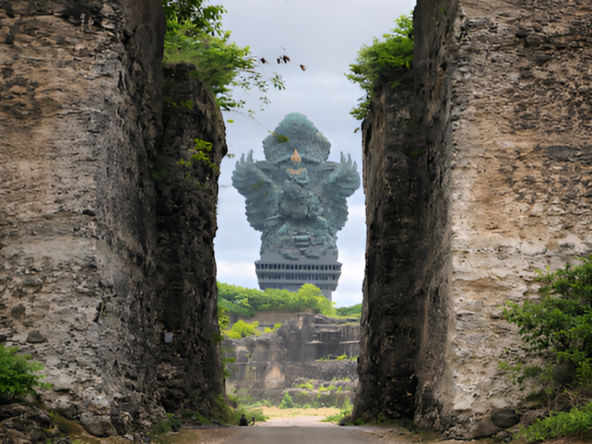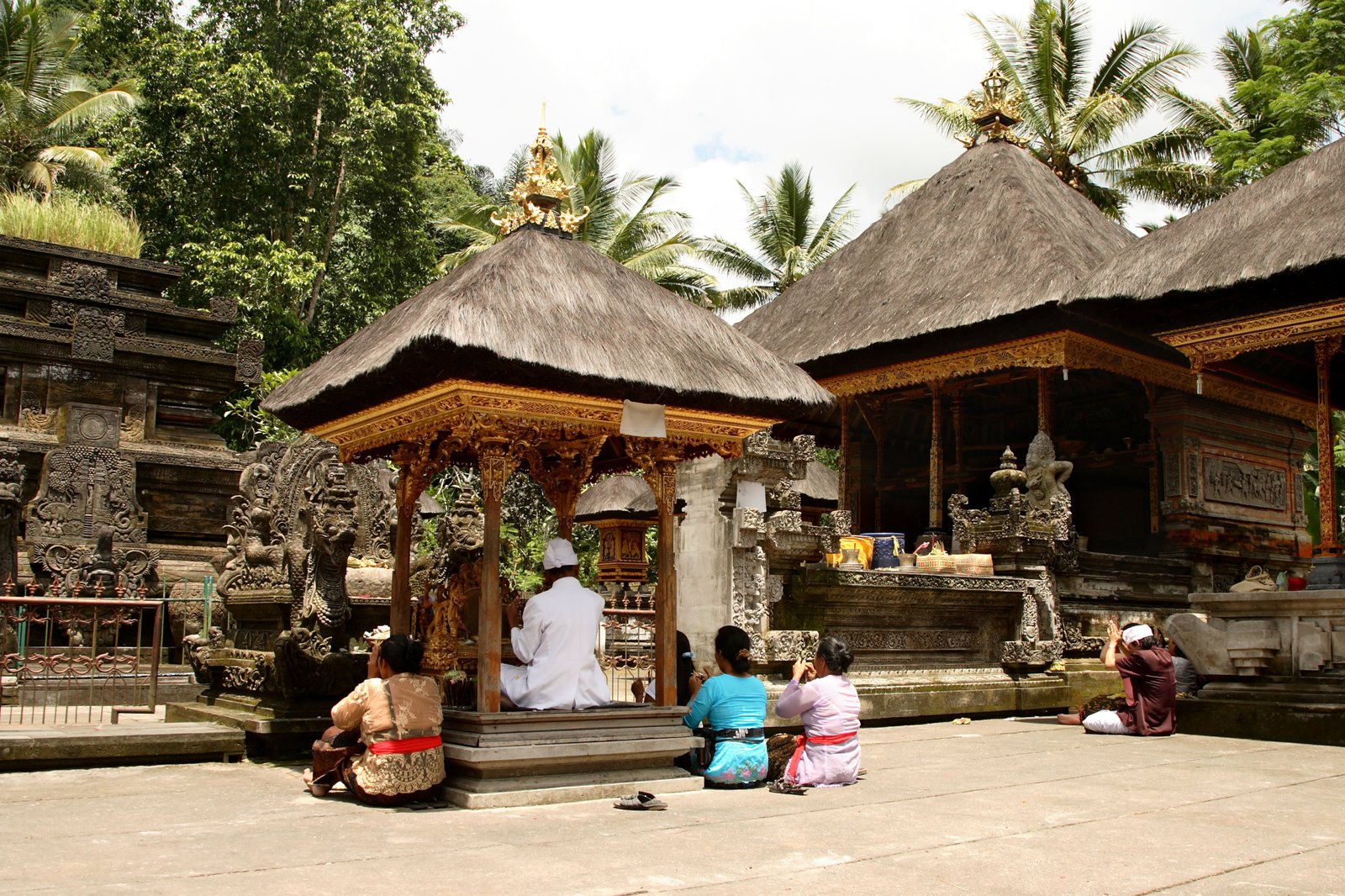
Nyepi, the Balinese Day of Silence, is often misunderstood as a single-day event. In reality, it is a multi-stage ceremonial cycle observed across Bali. Beginning days before and continuing after the day itself. Each stage plays a role in restoring balance between humans, nature, and the spiritual realm.
Understanding this sequence offers not only cultural insight, but also practical perspective especially for those living in or investing in Bali.
The Full Nyepi Ceremony Sequence in Bali
1. Melasti: Purification at the Sea
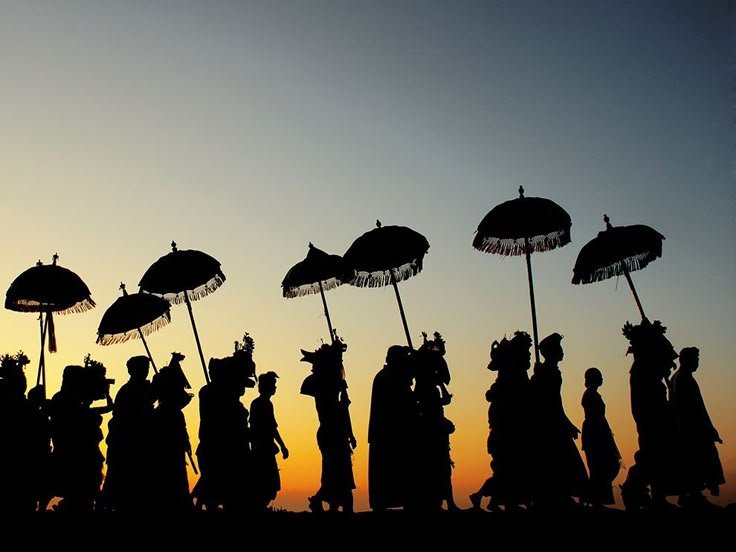
The cycle begins with Melasti, where communities gather and walk in procession to the ocean. Sacred temple objects (pratima) are brought to the water to be purified. The ocean is believed to absorb negative energy and restore balance.
This stage represents cleansing before renewal.
2. Tawur Kesanga: Restoring Balance
Before Nyepi begins, Bali performs Tawur Kesanga, a large-scale offering ritual. Ceremonies take place at village crossroads and temples using offerings (caru) designed to neutralize negative forces (bhuta kala).
This stage reflects the philosophy of Tri Hita Karana, harmony between people, nature, and the divine.
3. Pengrupukan: Releasing Negative Energy
On the evening before Nyepi, Bali enters Pengrupukan. The island becomes loud and intense, with fire, noise, and movement used to drive away negative forces.
This is a controlled release phase, preparing the environment for silence.
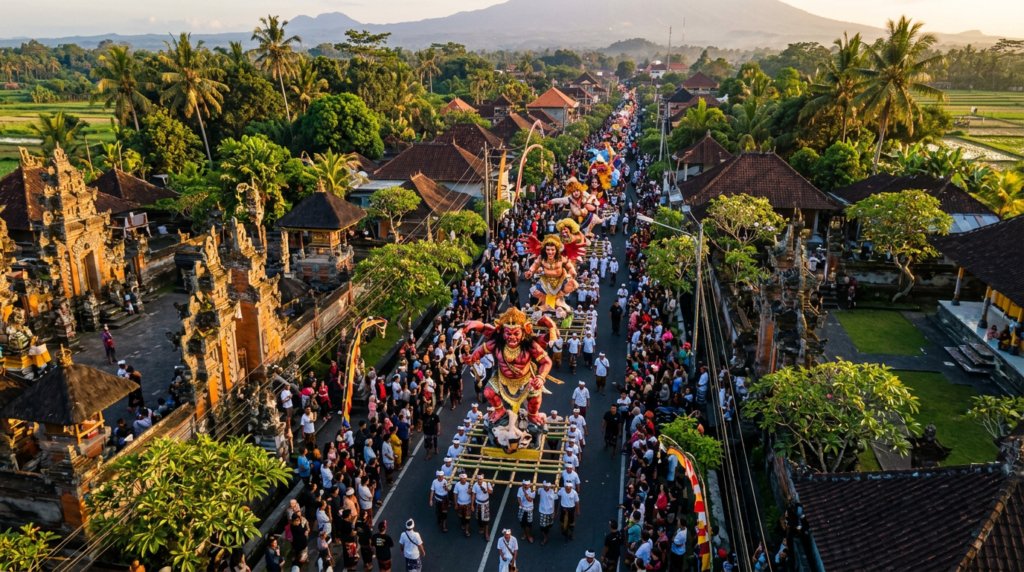
4. Ogoh-Ogoh Parade: Symbolic Destruction
The highlight of Pengrupukan is the Ogoh-Ogoh parade. Large handcrafted statues representing negative forces are carried through the streets, accompanied by music and community participation.
At the end of the night, many ogoh-ogoh are burned, symbolizing the destruction of imbalance before the new year begins.
5. Nyepi: The Day of Silence
Nyepi marks the Balinese New Year with complete stillness. For 24 hours, the entire island follows the Catur Brata Penyepian (Four Restrictions):
- Amati Geni (no fire or light)
- Amati Karya (no work)
- Amati Lelungan (no travel)
- Amati Lelanguan (no entertainment)
Even Ngurah Rai International Airport closes, making Bali one of the few places globally to completely pause.
This stage represents reflection, reset, and self-discipline.
6. Ngembak Geni: Reconnection and Renewal
The day after Nyepi is known as Ngembak Geni, marking the transition from silence back to social life. Communities begin to reconnect by visiting family, neighbors, and friends. It is also a time for forgiveness, where people openly apologize and reset relationships.
This stage represents emotional renewal after reflection.
7. Dharma Shanti: Strengthening Social Harmony
In the days following Nyepi, many communities hold Dharma Shanti gatherings. These are organized social and spiritual meetings where people come together to reflect, reconnect, and reinforce unity within the community.
This stage represents maintaining harmony after renewal.
What Nyepi Means for Property Owners and Investors

Nyepi is not just cultural, it directly influences behavior, demand, and property performance in Bali.
1. Surge in Private Villa Demand
During Nyepi, movement is restricted. As a result, many visitors choose to stay in:
- Private villas
- Fully serviced properties
- Self-contained accommodations
Villas with in-house F&B, staff, and entertainment become significantly more attractive.
2. Importance of Self-Sufficient Design
Properties that perform best during Nyepi typically offer:
- Functional indoor living areas
- Dining and kitchen integration
- Entertainment within the property
- Privacy and space
This highlights a key investment principle:
👉 Design is not aesthetic, it’s operational.
3. High-Value Guest Experience
Nyepi creates a unique guest experience that cannot be replicated elsewhere. For property owners, this becomes an opportunity to:
- Deliver premium, curated stays
- Increase perceived value
- Strengthen reviews and repeat bookings
4. Cultural Alignment Protects Long-Term Value
Bali’s commitment to traditions like Nyepi ensures that:
- Overdevelopment remains controlled
- Cultural identity is preserved
- The island retains its global positioning
For investors, this translates into long-term sustainability and demand stability.
Conclusion
Nyepi is not a single event, it is a structured cycle:
Purification → Balance → Release → Silence → Reconnection
For Bali, this maintains harmony.
For property owners and investors, it reveals something more important:
👉 The island operates on rhythm, not just growth.
Understanding that rhythm is key to making better long-term decisions in Bali’s property market.
Sources
- Nyepi and Balinese Cultural Traditions Overview – Indonesian Ministry of Tourism and Creative Economy
https://www.indonesia.travel/gb/en/trip-ideas/nyepi-balinese-day-of-silence - Cultural Rituals of Nyepi in Bali – Bali Provincial Government – Cultural Affairs Office
https://disbud.baliprov.go.id - Nyepi and Hindu Religious Practices in Bali – Parisada Hindu Dharma Indonesia (PHDI)
https://phdi.or.id - Nyepi Festival and Bali Tourism Insights – Bali Tourism Board
https://www.balitourismboard.org - Environmental Impact of Nyepi (Air Quality & Emissions Studies) – Various Environmental Reports (NASA Earth Observatory & Local Studies)
https://earthobservatory.nasa.gov/images/144669/indonesia-observes-day-of-silence - Bali Tourism Statistics and Accommodation Trends – Indonesian Ministry of Tourism and Creative Economy
https://www.kemenparekraf.go.id - Short-Term Rental Market Insights in Bali – AirDNA (Market Data & Occupancy Trends)
https://www.airdna.co - Villa Rental Trends and Guest Behavior in Bali – Bali Villa Rental and Management Association (BVRMA)
https://bvrma.org - The Impact of Culture on Bali’s Property Market – Bali Tourism Board
https://www.balitourismboard.org - Nyepi and Environmental / Behavioral Impact Reports – NASA Earth Observatory
https://earthobservatory.nasa.gov/images/144669/indonesia-observes-day-of-silence - Melasti Ceremony Bali – Byung-Cheol (Benjamin) Lee
https://pin.it/4op3Fggei