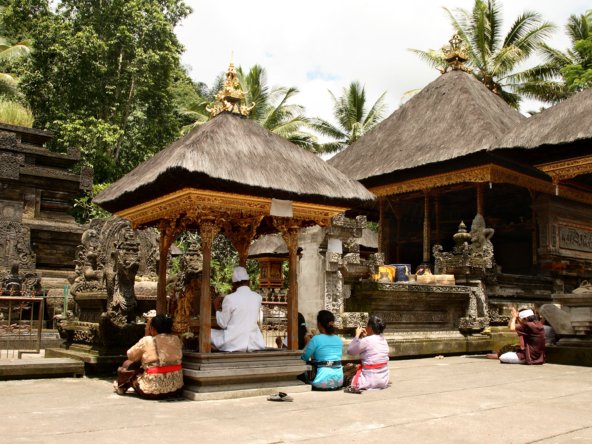
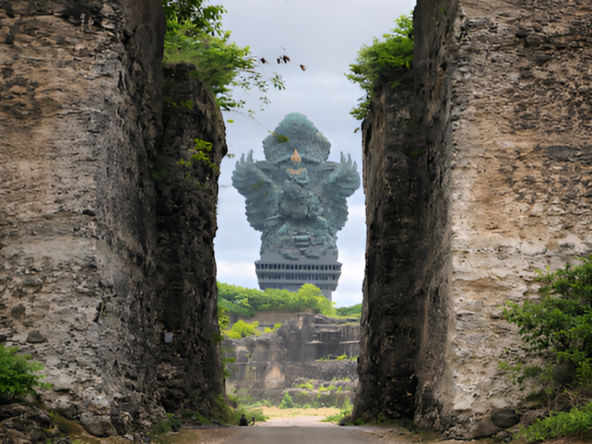
When you visit Bali, its distinctive architecture and art immediately reveal the island’s deep cultural roots. Traditional family compounds, with temples and open-air pavilions carefully arranged to honor spiritual balance, reflect a way of life guided by harmony and devotion. Balinese art, shaped by Hindu-Javanese influences from the 14th century Majapahit era, evolved through classical painting traditions in Kamasan and later found new expression in Ubud’s blend of heritage and modern creativity, a living fusion still thriving today.
Traditional Balinese compounds follow Asta Kosala Kosali, an ancient spatial philosophy similar to feng shui, aligning homes with the sacred kaja–kelod axis—kaja (toward Mount Agung) representing purity, and kelod (toward the sea) symbolizing the secular. Each building serves a distinct role: the bale daja (sleeping pavilion) in the north, bale dauh (guest pavilion) in the west, the kitchen in the south, and the family shrine in the most sacred, elevated corner. Guided by master builders (undagi) and priests, this timeless system ensures that every structure harmonizes with Bali’s spiritual and natural energy.
A Philosophy of Balance
At the heart of Balinese design lies the concept of Tri Hita Karana, the traditional philosophy of balance between:
- Parahyangan – harmony with the spiritual world,
- Pawongan – harmony among people, and
- Palemahan – harmony with nature.
The implementation aims to create a harmonious, peaceful, and prosperous life.
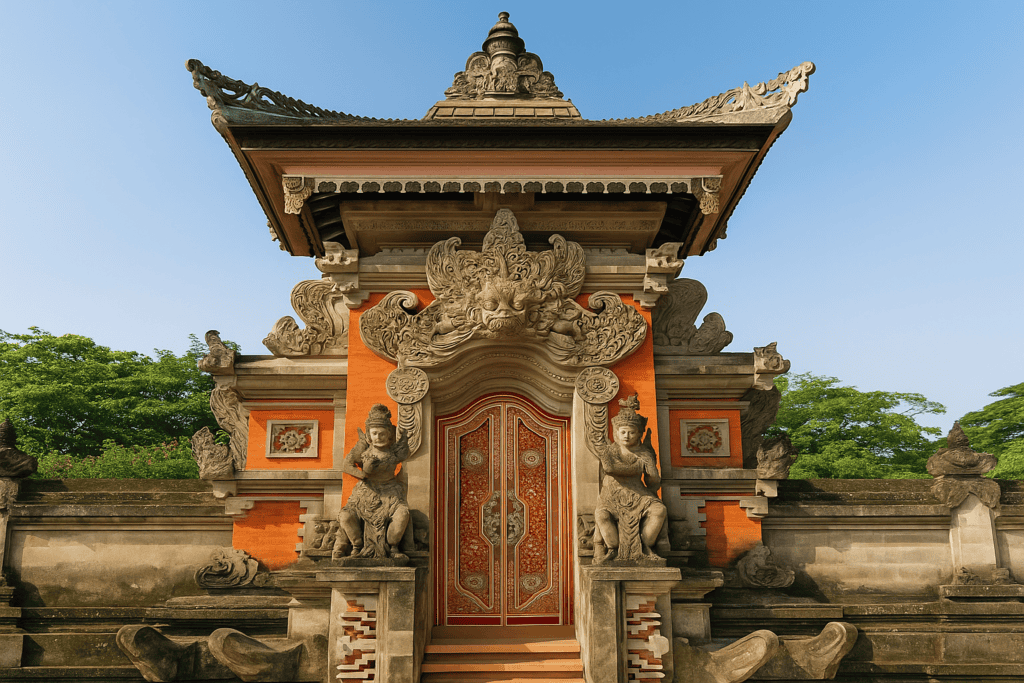
A traditional Balinese home is composed of seven main structures arranged around a central courtyard, each serving a distinct purpose. The Paon, or kitchen, located in the southeast, provides the household’s source of nourishment. Near the courtyard stands the Bale Sekenam, a family pavilion for resting, working, and socializing, while the Bale Sikepat serves as a space for men to gather and work. The Uma Meten is reserved for unmarried women, offering privacy and reflecting traditional roles. The Bale Tiang Sanga, often the most revered pavilion, is dedicated to parents or elders, symbolizing respect and hierarchy. Elevated above the ground, the Lumbung stores rice and other staples, representing prosperity and agricultural roots. Finally, the Pamerajan, or family temple, occupies the sacred northeast corner, serving as the spiritual heart of the compound. Many of these pavilions are semi-open, allowing natural ventilation suited to Bali’s tropical climate. The size and number of these structures vary depending on a family’s wealth, caste, and status, with affluent or high-caste families typically having more elaborate compounds.
3 Minimal Structure and Layout
Every traditional Balinese compound, regardless of wealth, centers around three essential structures:
- Family Temple (Pamerajan ): The sacred heart of the home, built in the most auspicious northeast corner (Kaja Kangin). It is indispensable for daily offerings and ancestor worship.
- Sleeping Pavilion (Bale) : The main living and resting space for the family. When resources are limited, this single pavilion serves multiple purposes.
- Kitchen (Paon) : More than a place to cook, it symbolizes the family’s ability to sustain and nurture life.
Additional pavilions are added as finances and family roles expand, guided by the Undagi (traditional architect) and priests to maintain spiritual harmony. Regardless of means, every structure is built with reverence and consecrated through rituals like the Melaspas purification ceremony, marking the home as a living, sacred space.
Conclusion: A Living Harmony
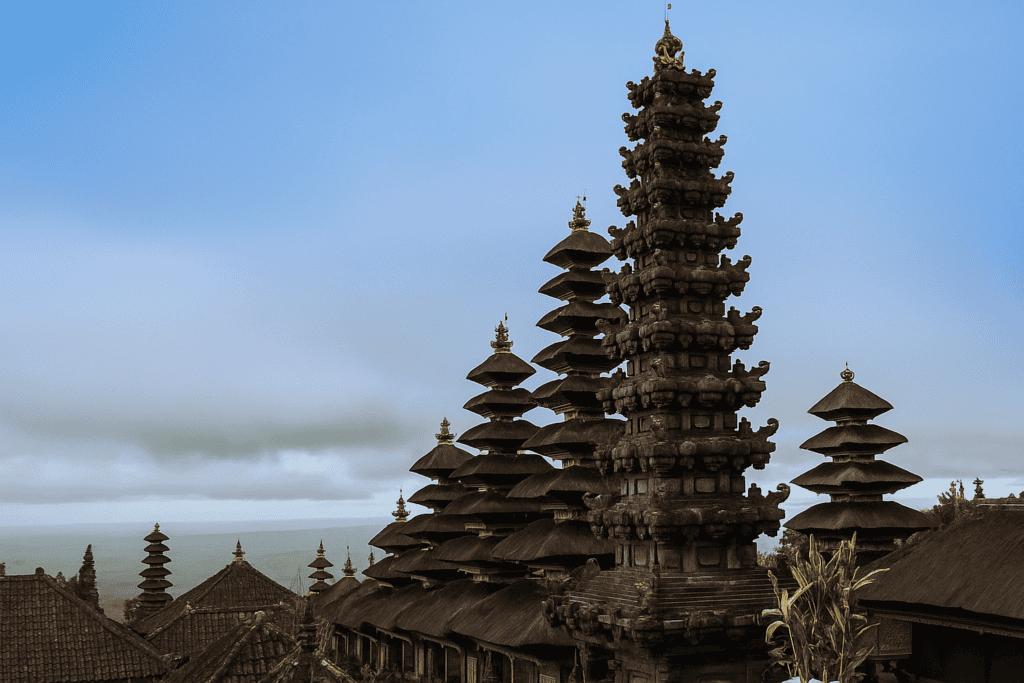
A Balinese home is more than architecture, it is philosophy made tangible. Rooted in Asta Kosala Kosali and inspired by Tri Hita Karana, every element, from the humble kitchen to the sacred shrine, reflects a deep commitment to balance: between human and divine, community and self, structure and spirit.
Even the simplest compound, with its three core spaces, lives in harmony with Bali’s sacred rhythm that continues to pulse through every offering, every breeze, and every beautifully carved doorway.